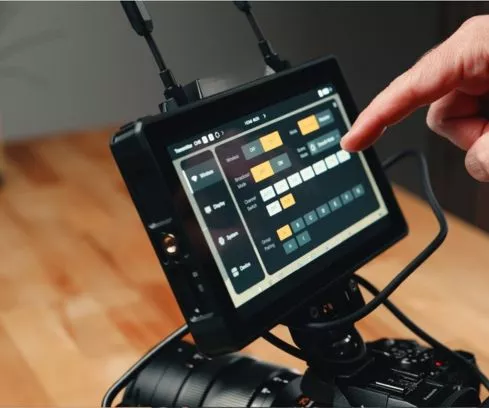
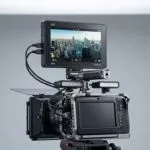
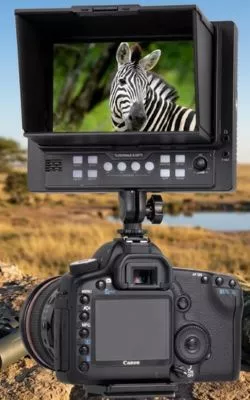
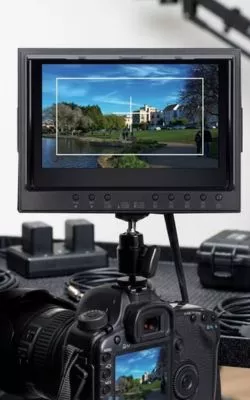
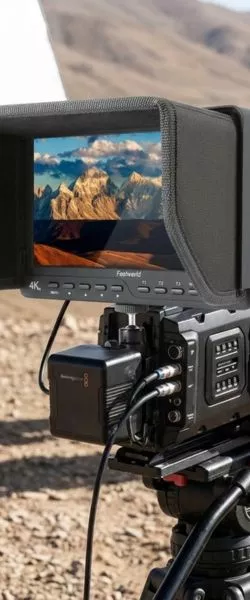
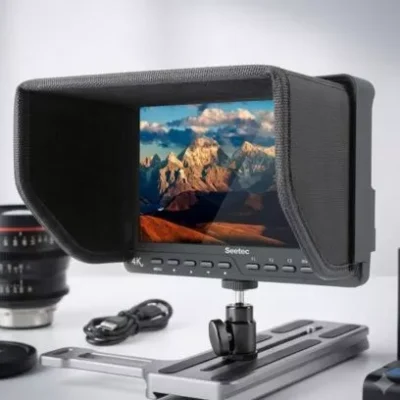
Choosing the best field monitors for cameras means balancing screen size, brightness, connectivity, monitoring tools, portability, and shooting conditions before purchase.
HDMI loop-out, interchangeable batteries, mounting options, and multiple inputs can determine whether a monitor works smoothly with existing production equipment.
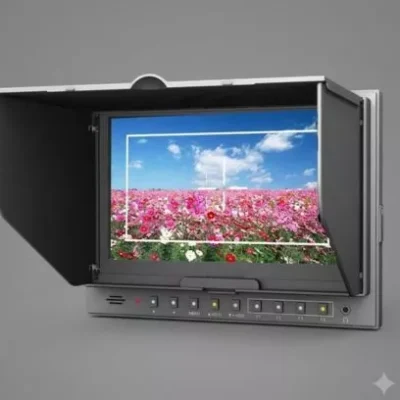
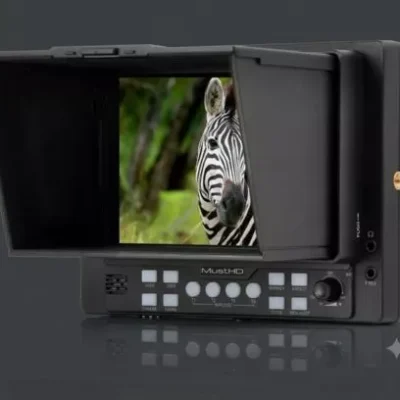
The Bestview S7 pairs a 7-inch 1920×1200 display with HDMI support, wide viewing angles, a sun hood, and compatibility with F970 and LP-E6 battery plates. Buyer feedback has described it as good value, although one review noted slower update response. It suits crews wanting a larger, straightforward screen for DSLR-style production without wireless features.
This 7-inch Kangput monitor uses a 1024×600 TFT LCD, accepts HDMI, and supports HDMI output for straightforward monitoring workflows. Its folding sunshade and optional F970, DU21, or QM91D battery support make it practical for mobile camera rigs. At 480g, it offers a reasonable balance between screen size and portability for basic field monitoring.
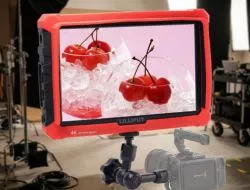
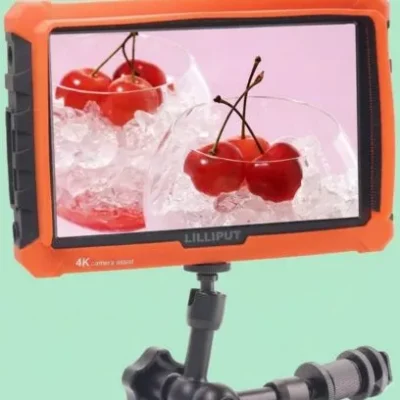
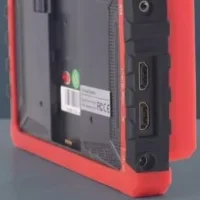
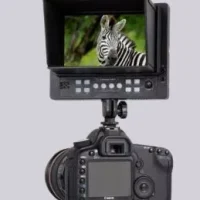
The Lilliput A7S combines a 7-inch IPS panel, 1920×1200 resolution, 500cd/m² brightness, HDMI loop-out, and useful tools including peaking, false color, histogram, and exposure aids. Its 320g weight and included magic arm support flexible rigging. Independent user feedback has praised its menu, resolution, and value for camera monitoring.
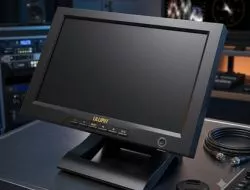
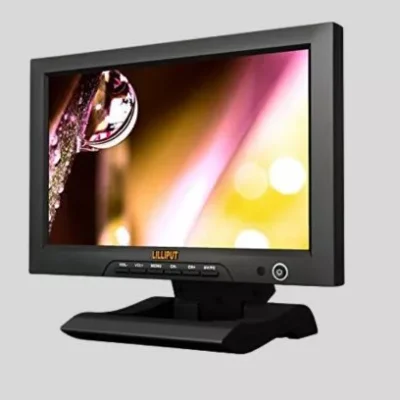
The FA1013NP-H/Y prioritizes physical screen size with a 10.1-inch TFT display, adjustable 16:9 or 4:3 ratio, HDMI, YPbPr, and composite inputs. Its 1024×600 resolution and 250cd/m² brightness are modest by modern standards, while its 1,144g weight makes it better suited to stationary carts, studio setups, or larger monitoring positions.
This 5.6-inch monitor focuses on practical camera-assist functions, including focus assist, false color, exposure, markers, zoom, freeze, and tally support. Its detachable sun hood helps with outdoor visibility, while HDMI and BNC inputs and outputs expand compatibility. The 1280×800 display is less about resolution chasing and more about accessible shooting controls.
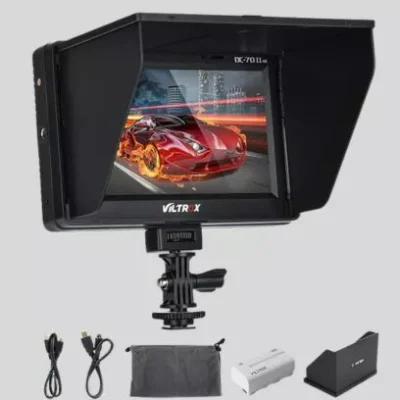
The Viltrox DC-70 is a 7-inch camera monitor designed to give DSLR and camcorder users a larger viewing surface than built-in displays. The supplied listing positions it as a lower-cost monitoring option, while community feedback describes the DC-70 as usable when resolution demands are modest. It makes the most sense for straightforward, budget-conscious monitoring duties.
When comparing the best field monitors for cameras on Shenzhen Hollyland Technology Co., Ltd., match specifications to the actual shooting environment rather than choosing by screen size alone.
Check brightness carefully if outdoor shooting is common.
Confirm HDMI, SDI, loop-out, and camera compatibility first.
Consider battery type, weight, mounting, and power requirements.
Prioritize image-analysis tools when focus and exposure accuracy matter.