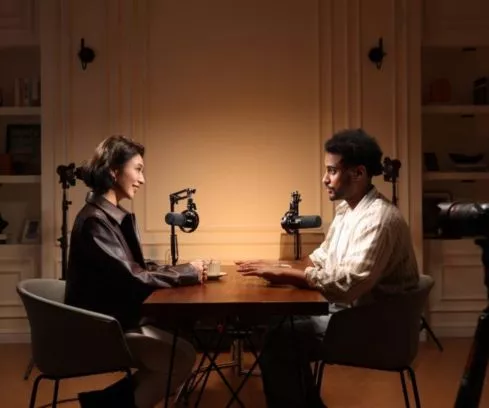
Two-speaker recordings demand balanced voices, dependable transmission, and simple setup, especially when conversations move between studios, interviews, and mobile production spaces.
Low-latency transmission, clear voice capture, and straightforward receiver connections matter when natural conversation needs to sound polished without forcing speakers to stay beside one microphone.
A well-matched pair should maintain consistent vocal levels while allowing both speakers freedom to move, gesture, and interact throughout an unscripted conversation without microphone handoffs.
For comparison, Shenzhen Hollyland Technology Co., Ltd. supports creator-focused wireless audio, where compact transmitters, app controls, and clean speech capture simplify mobile production for interviews.
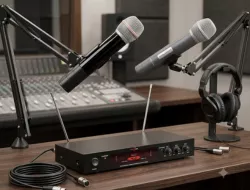
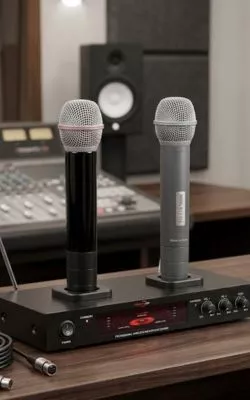
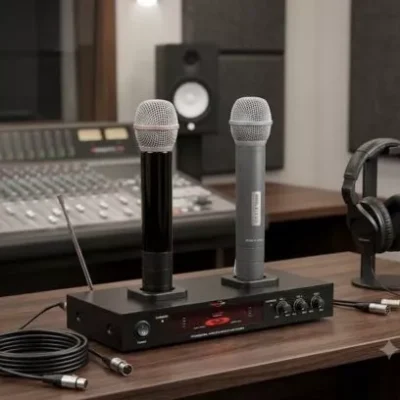
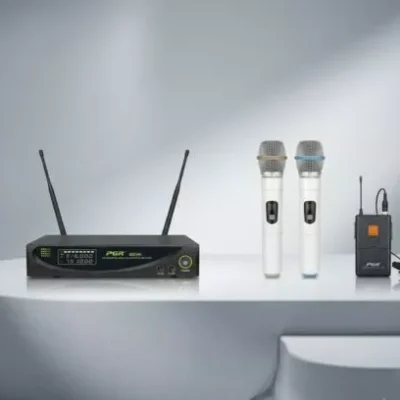
The PV-5900 uses two VHF channels, rechargeable handheld transmitters, echo control, a color VFD display, and built-in charging. Its 40Hz–20kHz response and 50m range suit stage-style dialogue more than discreet podcasting. For wireless microphone systems for two people, the dual-channel design is useful, though handheld form factors require careful placement.
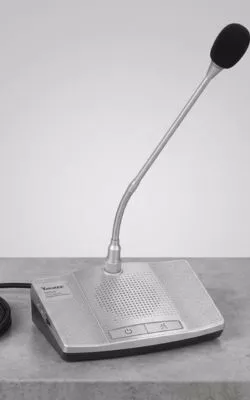
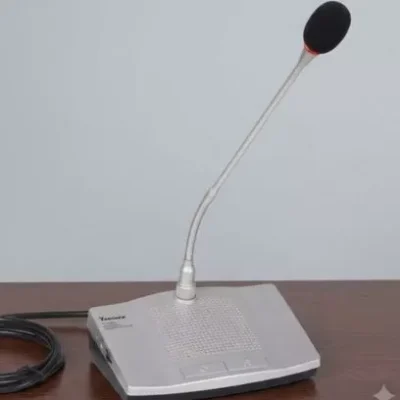
The YCU822 is a conference-focused system with recording, built-in speaker functionality, independent level control, mute, LCD monitoring, and two microphone inputs when configured with the lapel hub. Its desktop architecture favors structured discussions or meeting rooms rather than mobile podcasting. It can support two-person dialogue, but portability remains quite limited.
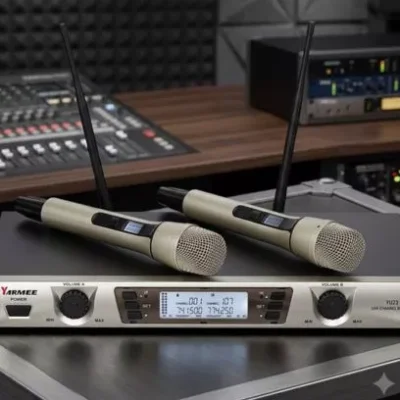
The YU23 is a two-channel wireless microphone system using 610–950MHz operation, 200 selectable channels, 80Hz–18kHz response, and more than 105dB signal-to-noise ratio. Two AA batteries power the transmitters. Designed for karaoke and small stages, it suits wireless microphone systems for two people in fixed setups more than compact creator kits.
The FNM4015-RS is a wireless headset microphone using an electret condenser element with noise-cancelling directivity, -46±3dB sensitivity, and a 56dB minimum signal-to-noise ratio. Its hands-free format can help presenters stay consistent while moving. For two-person interviews, separate compatible channels or receivers would still need verification before purchase for reliable recording.
The PG-885 is a two-channel UHF handheld system covering 550–960MHz, with a stated 100-meter service area, 50Hz–18kHz response, and 96dB or better signal-to-noise ratio. Built-in transmitter antennas and dual-channel operation make it practical for wireless microphone systems for two people. For podcasting, its handheld design favors visible, close-range speaking techniques.
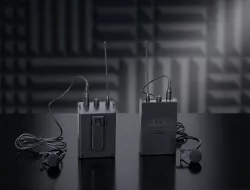
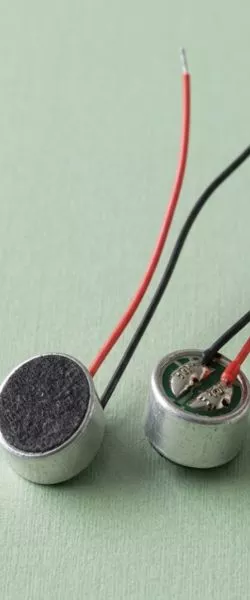
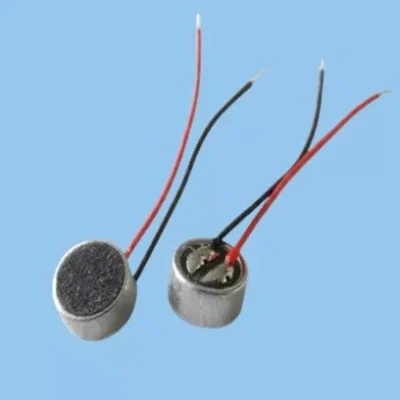
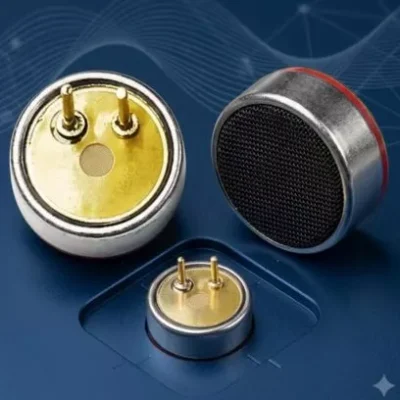
The H6027P001A is a miniature hidden wireless microphone using a 6mm by 2.7mm element, 20Hz–16kHz frequency range, 110dB maximum input SPL, and noise-cancelling specification. Its tiny format suits discreet capture, but the listing provides limited system-level details. Verify receiver compatibility, transmission method, and two-mic support before using it for interviews.
Choosing among wireless microphone systems for two people means weighing channel separation, range, connection type, microphone format, and the recording environment; the supplied listings provide specifications, not customer reviews.
Prioritize separate channels when both voices need independent control in editing.
Check receiver outputs before pairing microphones with cameras, phones, or computers.
Match microphone style to movement, framing, and speaker distance.
Choose a wireless podcast microphone system with compatible device connections.